The Virginia Supreme Court is at the center of a high-stakes constitutional showdown over whether to block a US House district map approved by voters—one that gives Democrats a clear electoral edge. What seems like a procedural redistricting dispute is actually a test of democratic legitimacy: Can a court overturn a map endorsed directly by the electorate, even if it benefits one party?
This isn’t just about political advantage. It’s about the balance of power between voters, courts, and constitutional interpretation in a deeply polarized era.
The Origins of Virginia’s Contested House Map
In 2020, Virginia voters approved a constitutional amendment creating an independent redistricting commission to draw new legislative and congressional maps. The goal was to end decades of partisan gerrymandering by removing mapmaking from the legislature’s hands. But the process quickly unraveled.
The bipartisan commission deadlocked along party lines, triggering a fallback mechanism: the Virginia Supreme Court would appoint special masters—typically retired judges or mapping experts—to draw the final map. In 2021, the Court selected two special masters who produced a congressional map that, while complying with traditional redistricting criteria like contiguity and population equality, resulted in a 7–3 Democratic advantage in the state’s 11 US House seats.
That outcome was notable. Virginia, while leaning blue in recent federal elections, is still politically competitive. Prior maps had yielded delegations closer to 6–5 or 7–4 splits. Analysts noted the new map packed Republican voters into fewer districts, particularly in rural southwest Virginia and the Shenandoah Valley, while spreading Democratic strength across urban and suburban corridors like Northern Virginia, Richmond, and Hampton Roads.
Voter Approval vs. Judicial Oversight: The Legal Conflict
Here’s where the tension escalates. In 2023, Virginia voters ratified the map in a statewide referendum—part of a broader ballot measure that also approved legislative district lines. That vote was intended to settle the matter democratically. But now, Republican lawmakers and conservative legal groups argue that the map violates the Virginia Constitution’s requirement for districts to be “composed of contiguous and compact territory.”
Their claim? Several districts—especially the 4th (stretching from Petersburg to the North Carolina border) and the 7th (snaking from Richmond’s suburbs through farm country to the Blue Ridge)—are so elongated and fragmented that they fail the “compactness” test. They point to geographic oddities: districts crossing major rivers without logical community ties, or including disparate regions with no shared economic or cultural identity.
The plaintiffs are not challenging the voter referendum itself but asking the court to apply strict constitutional scrutiny. They argue that popular approval doesn’t override explicit constitutional limits on district design.
Legal experts note a dangerous precedent: if courts can invalidate voter-approved maps, it could undermine public trust in direct democracy. But if courts defer too much, they risk allowing extreme gerrymandering under the cover of popular vote.
“A yes vote on the map wasn’t a blank check,” said Richard Hasen, election law scholar at UCLA. “Voters can’t ratify an unconstitutional process or product.”
Why This Case Could Reshape Redistricting Nationally
Virginia’s case is closely watched beyond state lines. Most states still rely on legislatures to draw maps, often leading to judicial intervention. But few have tried a hybrid model—voter-approved independent commissions backed by court-appointed special masters.
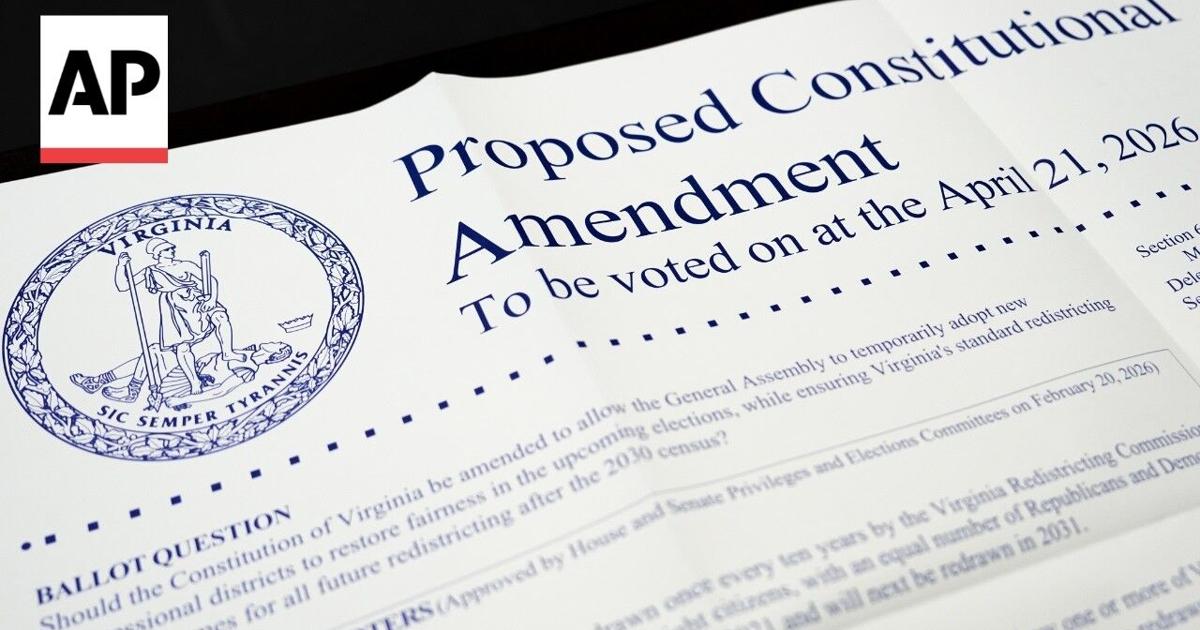
If the Virginia Supreme Court blocks the map despite voter ratification, it could embolden judicial activism in other states. Conversely, upholding the map might signal that courts should defer to democratic outcomes, even when maps favor one party.
Consider North Carolina, where courts have repeatedly struck down GOP-drawn maps as unconstitutional gerrymanders. Or Ohio, where repeated map rejections forced legislative compromise. Virginia’s standoff presents a mirror image: a Democratic-favoring map, challenged by Republicans, reviewed by a court with a conservative majority.
The irony? The current Virginia Supreme Court was itself restructured in 2021 by a Democratic legislature, shifting appointments from the General Assembly to a legislative lottery system. Critics say the bench is now politically balanced but legally unpredictable on redistricting.
Practical Implications for Virginia’s 2024 Elections
Timing is everything. The court’s decision comes as candidates prepare for the 2024 congressional races. If the map is blocked, chaos ensues.
Options include: - Reverting to an older map (possibly the 2017 remedial map used after a previous gerrymandering ruling) - Fast-tracking a new map by special masters - Emergency legislative action (unlikely due to partisan divides)
Each path carries risks: - Using an outdated map could misrepresent population shifts, violating the “one person, one vote” principle. - Rushing a new map invites legal challenges over transparency and public input. - Delayed primaries could disrupt ballot access and voter education.
The Virginia Department of Elections has contingency plans, but local election officials worry about voter confusion. “We’re preparing for multiple scenarios,” said Leslie Wilson, registrar in Fairfax County. “But we can’t print ballots or train poll workers without certainty.”
Meanwhile, campaign strategists are holding back major investments. Democratic incumbents in competitive districts like the 2nd and 7th are cautious. Republicans eye potential pickups in the 5th and 6th if boundaries shift.
Common Mistake: Candidates assuming map stability and overcommitting resources to voter outreach in areas that might be redistricted. Smart campaigns are diversifying field operations across overlapping zones.
Can a ‘Fair’ Map Favor One Party? This case forces a deeper question: Can a redistricting plan be both fair and partisan-leaning?
Yes—because fairness isn’t neutrality. Virginia’s population is increasingly concentrated in Democratic-leaning urban centers. Even without gerrymandering, this “geographic sorting” naturally advantages Democrats in district allocation. Packing and cracking aren’t the only drivers of partisan skew.
For example: - The 8th District, centered on Alexandria and Arlington, is overwhelmingly Democratic due to demographics, not manipulation. - The 9th, covering conservative southwest Virginia, is similarly homogenous.
In between lie swing districts like the 7th and 10th, where small boundary changes can tip the balance.
Analysts use metrics like the efficiency gap and mean-median difference to assess bias. Virginia’s current map shows a modest Democratic advantage—less skewed than past GOP maps but still noticeable.
Key point: A map drawn by nonpartisan experts can still reflect underlying political geography. The problem arises when mapmakers exploit that geography to entrench power.
What’s at Stake Beyond 2024
This ruling won’t just affect one election cycle. It will shape: - The credibility of citizen-led redistricting reforms - The judiciary’s role as a check on democratic majorities - Public confidence in electoral fairness
If the court blocks the map, reformers may question whether independent commissions are worth the effort if courts can override them. If it upholds the map, legislatures might resist future delegation of redistricting power, fearing loss of control.
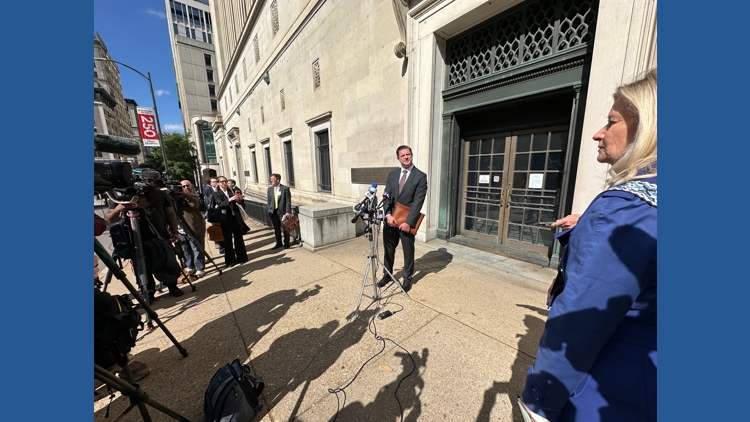
Workflow Tip: For civic organizations tracking redistricting, monitor not just outcomes but process. Transparent criteria, public hearings, and expert input matter as much as final maps.
Virginia’s experiment was meant to depoliticize boundary drawing. But with courts and voters now in conflict, the opposite may be happening.
A Decision That Tests Constitutional Boundaries
The Virginia Supreme Court’s choice isn’t merely legal—it’s philosophical. Should the Constitution be interpreted as a static set of limits, or a living framework adaptable to democratic will?
The plaintiffs demand strict adherence to “compactness,” a vague standard open to interpretation. The defendants argue that voter approval validates the process, especially when drawn by neutral special masters.
Precedent is mixed. In 2019, the US Supreme Court ruled in Rucho v. Common Cause that federal courts can’t police partisan gerrymandering, calling it a “political question.” But state courts, operating under state constitutions, have more leeway.
Virginia’s high court has already shown willingness to intervene. In 2015 and 2021, it struck down legislative maps for racial gerrymandering and contiguity flaws. This time, the presence of a voter referendum adds a new layer.
- Two possible outcomes:
- The map stands: The court rules that compactness concerns don’t rise to unconstitutionality, especially after voter ratification. Democrats retain structural advantage; reformers hail a win for democratic self-governance.
- The map falls: The court finds clear violations of contiguity or compactness. New maps are drawn under pressure, likely delaying elections. Republicans gain leverage; courts are seen as guardians of constitutional form.
Neither outcome resolves the deeper issue: how to draw fair districts in a polarized, geographically sorted nation.
Closing: Prepare for Whichever Map Prevails
Regardless of the Virginia Supreme Court’s decision, stakeholders must act now. Candidates should map overlapping districts in real time. Advocates should push for clearer constitutional standards. And voters should understand that redistricting isn’t a one-time event—it’s an ongoing battle over representation.
The most actionable step? Support nonpartisan redistricting criteria written into law—specific definitions of compactness, community integrity, and transparency. Because when rules are clear, courts intervene less, and democracy functions better.
Virginia’s moment isn’t just about Democrats or Republicans. It’s about whether a republic can fairly draw the lines by which it governs itself.
FAQ
Why is the Virginia Supreme Court involved in drawing maps? Because the bipartisan redistricting commission failed to agree, the state constitution assigned the task to the Court, which appointed special masters to create the map.
Does voter approval protect the map from legal challenges? Not necessarily. While voter ratification adds democratic legitimacy, courts can still strike down maps that violate constitutional requirements like contiguity or compactness.
How does this map favor Democrats? The current 7–3 Democratic advantage stems from how lines group urban and suburban voters. Even without intentional gerrymandering, population clustering benefits Democrats.
Could this delay the 2024 elections? Yes. If the map is blocked and a new one must be drawn quickly, primaries could be postponed, affecting candidate filings and ballot preparation.
What happens if the map is overturned? The court could revert to an older map or appoint new special masters. The General Assembly might also attempt to draw a new map, though partisan gridlock makes this unlikely.
Is this considered gerrymandering? Some analysts call it a “passive gerrymander”—less about deliberate manipulation and more about accepting a map that benefits one party due to geography and court-drawn boundaries.
How can citizens influence redistricting? Attend public hearings, submit community maps, advocate for clear redistricting criteria in state law, and vote in referendums on redistricting reform.
FAQ
What should you look for in Virginia Supreme Court Weighs Fate of Democratic-Favored House Map? Focus on relevance, practical value, and how well the solution matches real user intent.
Is Virginia Supreme Court Weighs Fate of Democratic-Favored House Map suitable for beginners? That depends on the workflow, but a clear step-by-step approach usually makes it easier to start.
How do you compare options around Virginia Supreme Court Weighs Fate of Democratic-Favored House Map? Compare features, trust signals, limitations, pricing, and ease of implementation.
What mistakes should you avoid? Avoid generic choices, weak validation, and decisions based only on marketing claims.
What is the next best step? Shortlist the most relevant options, validate them quickly, and refine from real-world results.